GST (Goods and Services Tax): A Complete Guide for Business Owners
Running a business in India means dealing with taxes—but since the introduction of the Goods and Services Tax (GST), things have become more streamlined, transparent, and unified. Still, many business owners find GST confusing. Let’s simplify it.
What is GST?
GST is a single indirect tax applied on the supply of goods and services across
India. It replaced multiple taxes like VAT, Service Tax, and Excise Duty.
It was implemented in India on 1st July 2017, under the supervision of the GST
Council.
“One Nation, One Tax — that’s the core idea behind GST.”
Types of GST
Depending on the transaction, GST is divided into:
-
CGST (Central GST) – Collected by the Central Government
-
SGST (State GST) – Collected by the State Government
-
IGST (Integrated GST) – For inter-state transactions
Who Needs GST Registration?
You must register under GST if:
-
Your turnover exceeds ₹40 lakh (₹20 lakh for services)
-
You do inter-state business
-
You sell through e-commerce platforms
-
You are a freelancer or service provider crossing limits
Even if not mandatory, voluntary registration can help in business growth.
Benefits of GST
-
1. Simplified Tax Structure : No more multiple taxes—GST combines everything into one system.
-
2. Input Tax Credit (ITC) : You can claim credit for tax paid on purchases, reducing your overall tax burden.
-
3. Better Compliance & Transparency : Everything is online—registration, return filing, and payments.
-
4. Boost to Business Expansion : Inter-state business is now easier without multiple tax barriers.
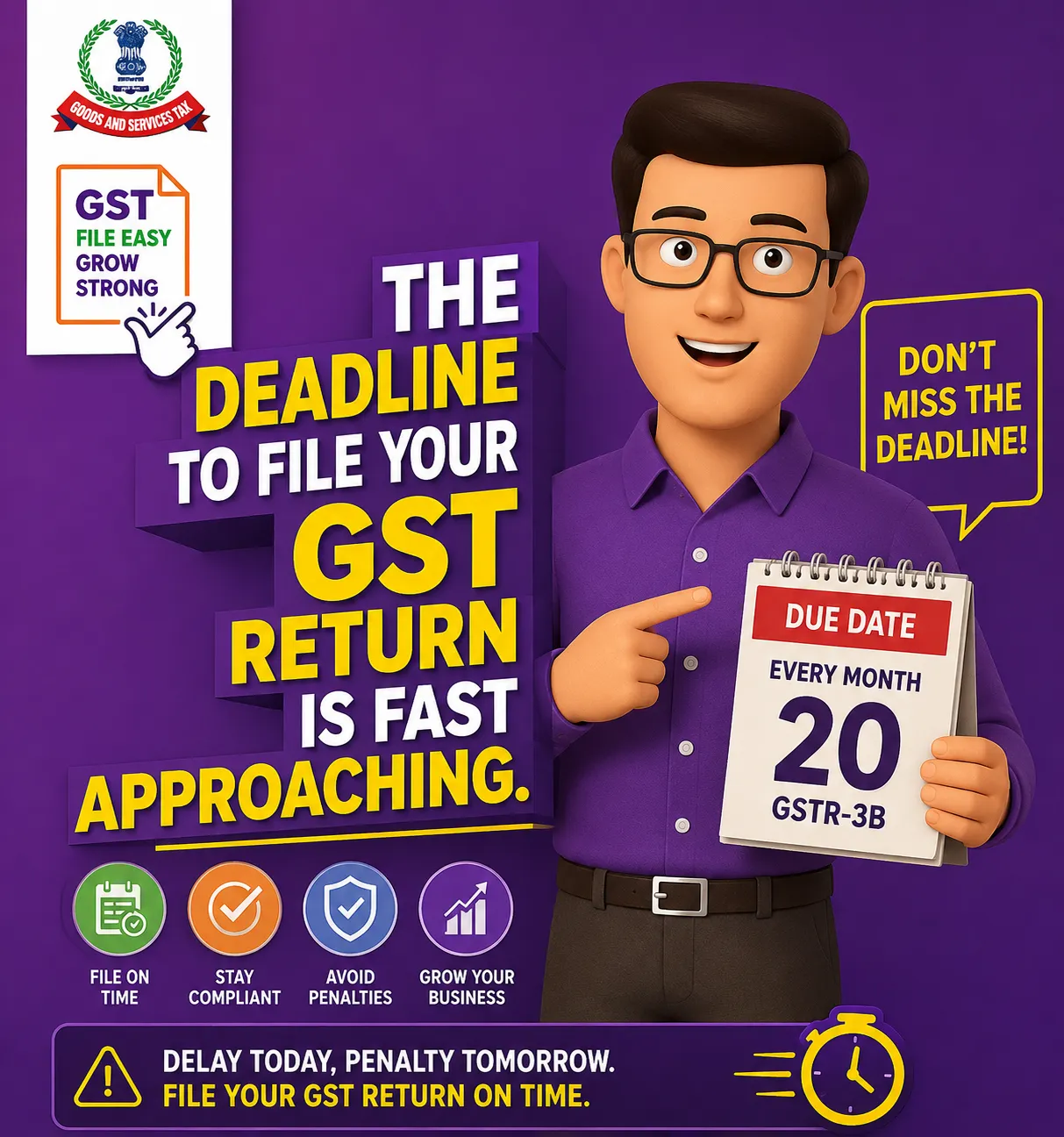
GST Return Filing
Depending on your business type, you may need to file:
-
GSTR-1 (Sales)
-
GSTR-3B (Summary return)
-
Annual Return (GSTR-9)
“Timely filing is crucial to avoid penalties and maintain compliance.”
Common Mistakes to Avoid
-
Not issuing proper GST invoices
-
Missing return deadlines
-
Wrong ITC claims
-
Ignoring reconciliation of sales and purchases
These can lead to notices and penalties.
GST for Small Businesses
If your turnover is under ₹1.5 crore, you can opt for the Composition Scheme:
-
Lower tax rate
-
Simple compliance
-
Limited ITC benefits
Best suited for small traders and local businesses.
Final Thought
“GST is not just a tax system—it’s a discipline for your
business.”
If managed properly, it can actually improve your cash flow and
credibility.
We provide complete Assistance in
-
GST Registration
-
GST Filing
-
GST notice handling
-
GST compliances
-
GST Audit